 Salkantay Trekking Tours
Humantay Lake: The Complete Guide
Humantay Lake is a turquoise glacier lake at 4,200 m in the Vilcabamba range near Soraypampa, Cusco. This guide covers the climb from Soraypampa, the entrance fee and its conflicting figures, the drive from Cusco, horses, the swimming ban and what altitude does to your pace. It also shows when the lake fits a Salkantay trek tours itinerary and when a day trip makes more sense. Figures come from the operator and reference pages listed at the foot of this guide. Where sources disagree, both figures are given rather than one.
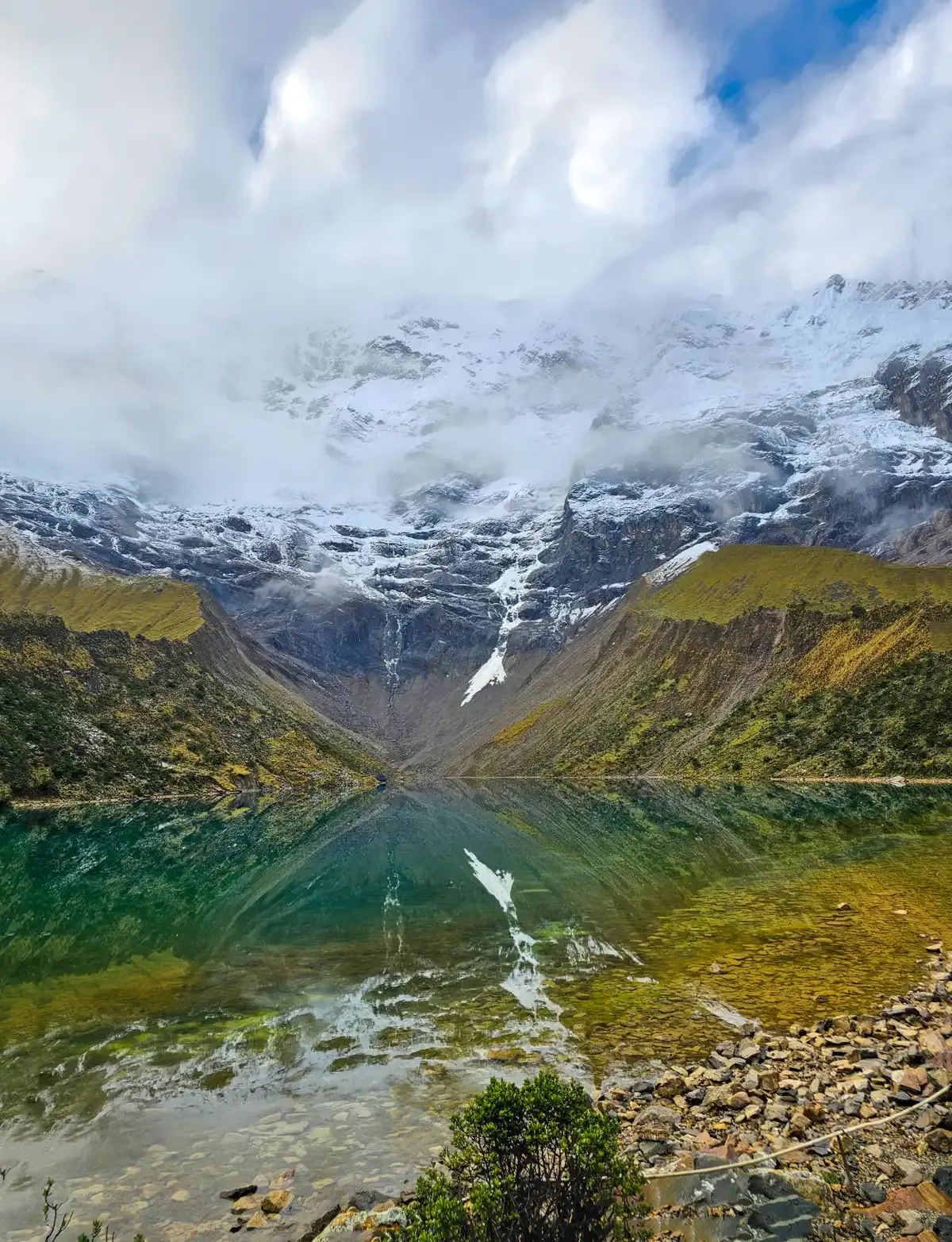
Humantay Lake under the Humantay glacier, the first-day detour from Soraypampa. Photo: Steve FUNG, CC BY-SA 4.0, via Wikimedia Commons
Quick answer Humantay Lake in brief
Humantay Lake sits at 4,200 m (13,779 ft), reached by a walk of about 2 km and 1 to 2 hours uphill from Soraypampa. Day tours drive about 120 km from Cusco, roughly 3 hours each way. Operators say swimming is prohibited and camping at the lake is not allowed.
Key takeaways
- Short on time? The Humantay Lake 2-Day Trek pairs the lake with Salkantay Pass for $335 and does not go to Machu Picchu.
- Want the lake plus the full route to Machu Picchu? The Classic 5-Day Salkantay Trek includes it for $760.
- See every stage of the route on the Salkantay trek map.
- Entrance fees are disputed between sources. Both sets of figures are given below.
Humantay Lake at a Glance
The lake sits below the Humantay glacier in the Vilcabamba range of the Andes, in the Cusco Region.
Key Figures
These are the numbers most people need before booking anything. Sources do not agree on every one, so where two references conflict, the table shows both sides. Soraypampa is the trailhead village, and the Cusco drive figure is a road distance measured by day-tour operators.
Entrance fees are community charges collected on the way in, and no official municipal document backs any single figure, so treat the amounts as a range and carry cash.
| Fact | Figure | Note |
|---|---|---|
| Lake altitude | 4,200 m (13,779 ft) | Operator figure, widely repeated |
| Humantay peak above the lake | 5,473 m | Wikipedia figure. Operators quote 5,470 m and one source says 5,950 m |
| Soraypampa altitude (trailhead) | About 3,900 m | Sources quote 3,880 m, 3,900 m and 3,920 m. One operator starts the walk at 3,800 m |
| Hike distance | About 2 km each way | One operator counts 3 km round trip, another measures 4.2 km round trip |
| Climb | Roughly 300 to 400 m | Wikivoyage gives 300 m of climbing. Alpaca Expeditions says the 3,800 m trailhead means about 400 m of gain |
| Time up | 1 to 2 hours | One operator counts almost 2 hours up and about 1.5 hours down |
| Entrance fee | 10 to 30 soles for foreigners | Sam Travel Peru says 30 soles foreign and 20 Peruvian, collected at the trailhead. PeruRail says 10 and 5 soles, paid in Mollepata. Tierras Vivas says 20 and 10 soles |
| Drive from Cusco | About 120 km, roughly 3 hours | Through Limatambo and Mollepata. One operator times Cusco to Mollepata at 2 hours 45 minutes plus about 30 minutes to Soraypampa |
The Name and the Sacred Status
The name comes from Quechua. Salkantay Trekking says huma means head in Quechua and reads Humantay as sacred head or head of the gods, while admitting the suffix -ntay is hard to interpret. The lake takes its name from the nearby Humantay peak.
Operators say swimming is prohibited and camping at the shore is not allowed. Visitors sometimes make a Pachamama offering by placing stones, called apachetas, in thanks for arriving safely. Salkantay itself is one of the most revered Apus, the Quechua term for a mountain lord with deep spiritual value.
A local legend names Salkantay and Ausangate as two brothers who left to find food to end their people's famine. Salkantay Trekking says the turquoise colour comes from mineralised glacier meltwater and the water's purity, and that it is strongest on sunny days.
Sources: Salkantay Trekking, Wikipedia, Wikivoyage
The Hike Up From Soraypampa
A short but steep climb from about 3,900 m to the lake at 4,200 m, on rocky ground that gets slippery.
The Trail and the Climb
The walk starts at Soraypampa, the base camp below Salkantay at about 3,900 m. Most sources put the route at about 2 km each way, with Wikivoyage giving 4 km out and back and 300 m of climbing, and Amateur Traveler measuring 4.2 km total at 2.1 km each way. The path climbs steadily on rocky ground.
Salkantay Trekking rates it as moderate to challenging and warns about slippery stones, altitude, cold and wind. Rockslides or avalanches are uncommon but possible. Most people take 1 to 2 hours up and about 1.5 hours down.
Sam Travel Peru recommends leaving the lake before about 1 pm because of strong afternoon winds. Daytime temperatures around the lake run about 10 C and can drop to 0 C or lower at night, because the water is fed by glacier melt.
Horses
Local residents at Soraypampa offer horse hire for the uphill section only. Horses are not offered for the way down. Prices quoted across sources run from about 80 soles to 100 soles per section, so expect to pay somewhere in that band and confirm the price before setting off.
Riding up does not remove the altitude problem, because the lake still sits at 4,200 m and you have to walk back down on your own legs. Carry cash in soles.
What the Altitude Does to Your Pace
Altitude sickness usually occurs above 2,500 m, per the NHS, and symptoms often begin 6 to 10 hours after arrival. Cusco sits at about 3,400 m, so the trailhead is already higher than the city and the lake sits at 4,200 m. If you have come from sea level, the climb will feel far harder than the distance suggests.
The NHS advises avoiding going from below 1,200 m to above 3,500 m in one day, so most visitors accept a slow pace and frequent stops. Spend 2 to 3 days in Cusco first if you can. If symptoms worsen, the NHS says descend 300 to 1,000 m, and confusion, balance problems or breathlessness at rest need immediate descent and medical help.
Coca tea is served on guided treks, but there is no concrete scientific evidence that coca leaves prevent altitude sickness.
Day Trip or Trek
A day trip works like this. One operator picks up around 4 am from Cusco hotels, and day tours drive about 120 km through Limatambo and Mollepata and hike in the morning. Doing it alone, a public bus from Cusco to Mollepata costs about 15 soles, then a colectivo or a taxi of about 50 soles covers the last stretch to Soraypampa.
One operator puts the shared taxi from Mollepata at 10 soles maximum. If you want the lake inside a longer route, the Humantay Lake 2-Day Trek adds Salkantay Pass and a Sky Camp night for $335, while full routes such as the Salkantay Sky Camp 4-Day at $720 include the lake. The full line-up of bookable options sits in the comparison table on the homepage.
For the stage-by-stage route the lake hangs off, see the Salkantay trek map.
Sources: Wikivoyage, NHS altitude sickness, PeruRail
Guide to Hiking to Humantay Lake in Peru
The climb from Soraypampa to the lake, filmed on the trail. Third-party video by Jared Dillingham. This site did not shoot it and has no relationship with the creator.
A Day Trip or a Salkantay Trek
You can see Humantay Lake as a long day trip from Cusco or as the opening stage of a Salkantay trek tours itinerary. The lake sits at 4,200 m, the trailhead at Soraypampa is about 3,900 m, and the walk up is roughly 2 km with 300 to 400 m of climbing.
Ways to Include the Lake
A day trip means a very early start from Cusco at about 3,400 m, roughly 120 km of road through Limatambo and Mollepata, and a climb to the lake on the same day. Operators describe hotel pickup around 4 am and a drive of about 3 hours each way, so the lake visit fits into one demanding day. You can also travel independently by public bus from Cusco's Arcopata terminal to Mollepata for about 15 soles and continue by taxi for about 50 soles.
The other option is to see the lake on a Salkantay trek, where the Humantay hike fits into day 1 or an afternoon walk from a camp at Soraypampa. Sleeping at altitude before the climb changes how hard it feels. The table below compares some of the bookable treks on this site that include the lake, with their card prices. A full side-by-side of every listing lives on the homepage comparison table.
| Way | Days | Price | Machu Picchu |
|---|---|---|---|
| Humantay Lake and Salkantay Pass 2-Day Trek, Sky Camp night, up to 12 people | 2 days | $335 | Not included, the trip ends with hotel drop-off in Cusco |
| Salkantay Sky Camp 4-Day Trek, Sky Camp and Mountain Sky View nights, maximum 12 | 4 days | $720 | Included, Circuit 2, then Circuit 3 or 1 if unavailable |
| Salkantay Sky Lodge Domes 4-Day Trek, domes with private bathroom, maximum 8 | 4 days | $680 | Not included, entrance USD 48 per person paid on top |
| Private Salkantay 4-Day Vistadome Trek, tents plus private hotel room | 4 days | $1,265 | Included, subject to availability |
| Classic 5-Day Salkantay Trek, three camps and a 3-star hotel night, maximum 10 | 5 days | $760 | Included, Circuit 2 with fallback circuits |
Why a Night at Soraypampa Helps
The NHS advises avoiding a jump from below 1,200 m to above 3,500 m in a single day. A day trip from Cusco means a very early start at about 3,400 m, a drive to roughly 3,900 m at Soraypampa and a climb to a lake at 4,200 m, all within hours. That is why the Humantay hike can hit some visitors harder than its 2 km length suggests.
The NHS suggests gaining no more than 300 m of sleeping altitude per night above 3,000 m, and a rest day every 3 to 4 days. Treks such as the Humantay Lake and Salkantay Pass 2-Day Trek put you at the Sky Camp near 3,900 m before you climb, and symptoms usually begin 6 to 10 hours after arrival at altitude and pass in 1 to 3 days. See how hard is the Salkantay trek for more on fitness and acclimatization.
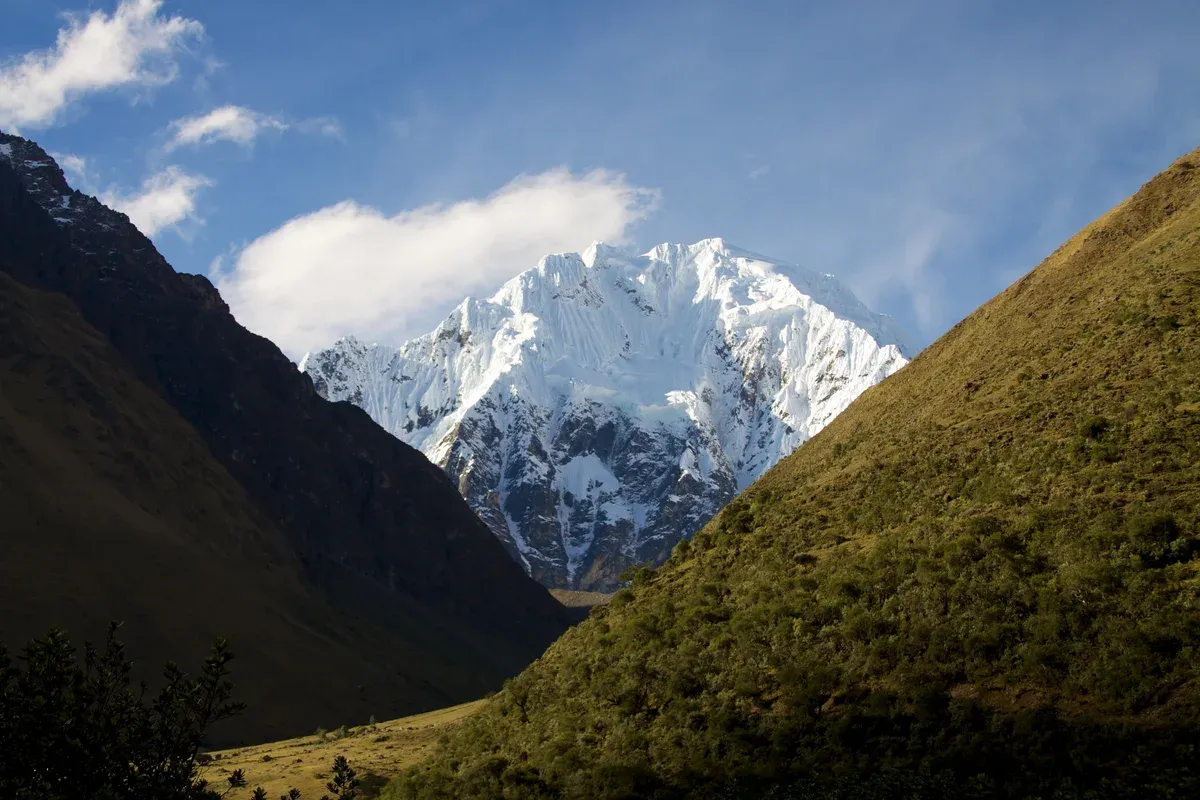
Nevado Salkantay seen from the approach to the Soraypampa campsite. Photo: McKay Savage from London, UK, CC BY 2.0, via Wikimedia Commons
Altitude, Weather and What to Bring
Humantay Lake sits high enough that weather and altitude decide how much you enjoy it. Plan for cold mornings, strong sun and a stiff climb.
Cold, Sun and Rain
Daytime temperatures at the lake run about 10 C and can drop to 0 C or lower at night because the water is fed by glacier melt. Sun exposure at 4,200 m is intense even on cool days. The dry season from May to mid-October brings sunny days and the strongest turquoise colour in the water, while the lake stays open in the rainy season with fewer visitors.
One operator recommends leaving the lake before about 1 pm because of strong afternoon winds, so an early start suits the walk.
Altitude Rules to Know
Altitude sickness usually occurs above 2,500 m, and Humantay Lake at 4,200 m is well past that line. Symptoms normally start 6 to 10 hours after arrival and most pass in 1 to 3 days. The warning signs that need immediate descent and medical help are confusion, balance problems, breathlessness at rest and a cough with blood.
If symptoms worsen, the advice is to descend around 300 to 1,000 m. Spend 2 to 3 days in Cusco before the hike if you can, and read more in the guide to how hard is the Salkantay trek.
What to Wear and Carry
Layers matter most: a warm jacket for near-freezing temperatures, a sun hat and sunscreen for the exposed upper trail, and shoes with grip for rocky ground. Operators rate the hike as moderate to challenging because of altitude, cold and wind, and rockslides are uncommon but possible. Carry cash in soles for the entrance fee, roughly 10 to 30 soles depending on the source, and 80 to 100 soles more if you might hire a horse for the uphill stretch.
The full Salkantay trek packing list covers clothing, sleeping bags and poles in detail.
Humantay Lake FAQ
How difficult is the Humantay Lake hike?
It is short but steep: about 2 km each way from Soraypampa, climbing roughly 300 to 400 m to the lake at 4,200 m, with 1 to 2 hours uphill. The altitude makes it feel harder than the distance, as the guide to how hard is the Salkantay trek explains.
Can I swim in Humantay Lake?
No. Operators say swimming is prohibited to protect the water quality, and camping is not allowed at the lagoon either.
What is special about Lake Humantay?
Its turquoise colour comes from mineralised glacier meltwater, strongest on sunny days, and it sits below the Humantay peak at 5,473 m. Visitors sometimes make Pachamama offerings of stacked stones there.
How do I get to Humantay Lake from Cusco?
Day tours drive about 120 km through Limatambo and Mollepata to Soraypampa, about 3 hours each way. Independently, a bus from Cusco's Arcopata terminal to Mollepata costs about 15 soles and a taxi to Soraypampa about 50 soles.
How much is the entrance fee for Humantay Lake?
Sources disagree: one operator lists 30 soles for foreigners and 20 for Peruvians, another 20 and 10, and PeruRail lists 10 and 5 soles paid in Mollepata. Treat it as a small community charge of roughly 10 to 30 soles, and check each listing, because some tours include the entry fee and others, such as the Hola Cusco 5-day, charge it on top.
Is Humantay Lake harder than Rainbow Mountain?
No source here compares the two hikes directly. Humantay is a 1 to 2 hour uphill climb to 4,200 m from about 3,900 m, and operators rate it moderate to challenging because of the altitude, wind and slippery stones.