 Salkantay Trekking Tours
How Hard Is the Salkantay Trek?
If you are asking how hard is the Salkantay trek, the honest answer is that it sits between moderate and challenging. Most days are long but steady, with about 6 to 8 hours of walking on rugged dirt trail. The real test is day 2, the climb to the Salkantay Pass at roughly 4,630 m, and the altitude that comes with it. This page breaks the route down day by day, explains what altitude does to your body, lists the genuine dangers, and shows the ways to make the trek easier, including shorter routes and horse support. For prices and inclusions side by side, the comparison table on Salkantay trek tours covers every bookable option.
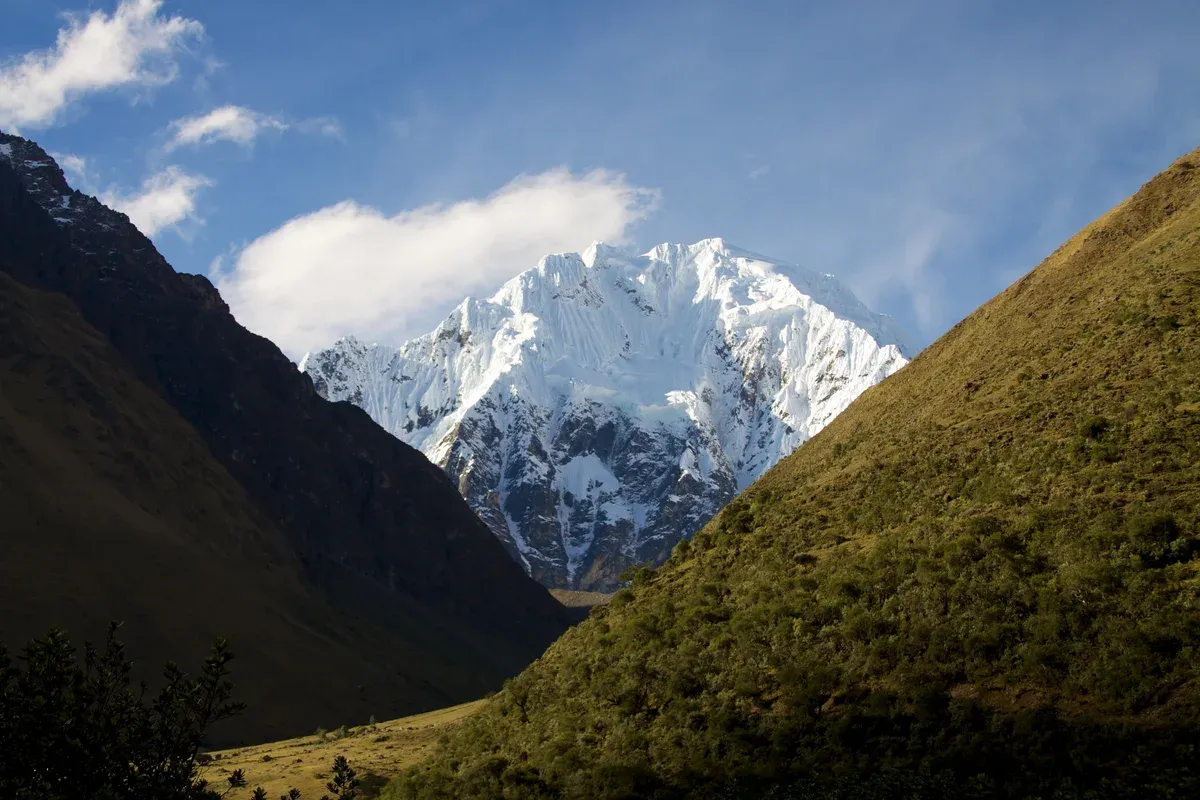
Nevado Salkantay seen from the approach to the Soraypampa campsite. Photo: McKay Savage from London, UK, CC BY 2.0, via Wikimedia Commons
Quick answer The honest difficulty verdict
The hardest day is day 2: about 810 m of gain to the Salkantay Pass at roughly 4,630 m, then a long descent, about 8 hours in total on one guided 4-day account. Operators quote about 6 to 8 hours of walking a day on rugged but mostly undemanding dirt trail. Altitude is the main difficulty, not fitness, so you need 2 to 3 days in Cusco at 3,400 m before you start.
Key takeaways
- See the day-by-day figures in the difficulty table and how the pass day works.
- Read the NHS altitude rules and the warning signs in the altitude section.
- The real hazards, from landslides to the 4,000 m insurance line, are in is the Salkantay trek dangerous.
- Shorter and softer options, including the 2-day route, are in ways to make it easier.
How Hard Each Day Is
Figures below come from published trekker itineraries and operator guides, mainly a guided 4-day account and the Salkantay Trekking 5-day itinerary. Distances and daily hours vary between operators, so treat them as honest ranges rather than promises.
The Day-By-Day Numbers
Roads and trains allow the route to be shortened to 4 days. The classic 5-day itinerary spreads the same trail over more days. Salkantay Trekking averages about 7 hours of hiking per day across its 5-day itinerary, with daily distances of 10, 23.5, 17, 25 and 3 km. Wildland Trekking quotes 6 to 8 hours per day generally, and one operator warns to expect daily elevation gain of up to 2,000 ft and loss of up to 5,000 ft on the day 2 descent. The route itself is rugged dirt with a few rocky sections, and reasonably undemanding except for the pass day.
Where the trail goes depends on the version you pick, and the Salkantay trek map shows each stage.
| Day | Distance | Climb or descent | Hardest part |
|---|---|---|---|
| Day 1, Challacancha or Mollepata to Soraypampa | 20 km from Mollepata per Wikivoyage, or 10 km on the 5-day itinerary | About 670 m gain on the 4-day version | The first night sleeping at about 3,900 m |
| Day 2, Soraypampa to Chaullay over the pass | About 20 to 23.5 km | 810 m gain to the pass at about 4,630 m, then a descent of up to 5,000 ft to about 2,900 m | The steepest ascent plus a knee-punishing descent, 8 hours on the 4-day route |
| Day 3, Chaullay to La Playa or Aguas Calientes area | About 17 to 18 km on 5-day versions, 6 hours on the guided 4-day account | Mostly descent into cloud forest | Jungle ups and downs, reported as the most strenuous part by one trekker in heavy rain |
| Day 4, to Aguas Calientes and Machu Picchu | About 10 km from Hidroelectrica, or 22 km on one hard version | A walk along the train tracks, then about 1,800 stairs up to Machu Picchu or a bus | On one hard version the day is 22 km with nine of them along train tracks. On the guided 4-day account the trail from Aguas Calientes to Machu Picchu is 2.5 hours |
The Pass Day, the Real Test
Day 2 is the hardest day of the trek, and most of the sources in this guide agree on that. You leave Soraypampa at about 3,900 m and climb roughly 810 m to the Salkantay Pass. Operators quote the pass at 4,600 to 4,650 m, and this guide uses 4,630 m. On the guided 4-day route the whole day takes about 8 hours, and on the Salkantay Trekking 5-day itinerary the pass day is 23.5 km. The climb is steep and slow because of the altitude. Coming down is arguably worse for your legs, with up to 5,000 ft of loss on the way to Chaullay at about 2,900 m.
One trekker who has done both routes called Salkantay harder than the Inca Trail, citing the longer climbs to the pass and again to Llactapata, with the longest Salkantay days running 20 to 22 km against the Inca Trail's single 16 km day. If you want the full comparison, it lives on the Salkantay trek vs Inca Trail page.
Altitude: the Real Difficulty
Fitness gets you up the pass. Acclimatisation is what gets you over it safely. The figures here come from the NHS and standard references.
What the NHS Advice Means for This Trek
Altitude sickness usually occurs above 2,500 m, and symptoms normally begin 6 to 10 hours after arrival at altitude. Most mild cases pass in 1 to 3 days. The NHS advises avoiding a jump from below 1,200 m to above 3,500 m in a single day, and above 3,000 m not to gain more than 300 m of sleeping height per night, with a rest day every 3 to 4 days. The Salkantay breaks those rules by design: you sleep at about 3,900 m on night one and cross 4,630 m on day 2. That is why acclimatisation matters so much.
Cusco sits at about 3,400 m, which already counts as altitude by the NHS definition. Operators recommend arriving 2 to 3 days before your trek starts, and Wikivoyage advises at least 2 to 3 days in Cusco or at a similar altitude. Spending those days walking around the city and doing a gentle acclimatisation hike is the single best thing you can do. Coca tea is served on guided treks and coca leaves have been chewed in the Andes for more than 3,000 years, but there is no concrete scientific evidence that they prevent altitude sickness. This guide gives no medical dosing advice, talk to a travel health professional about medication before you go.
Warning Signs and What To Do
Most mild altitude sickness passes in 1 to 3 days. The NHS says certain symptoms need immediate descent and medical help: confusion, problems with balance, breathlessness when you are resting, and a cough with blood. If symptoms worsen at altitude, the advice is to descend around 300 to 1,000 m.
Guided treks help here. Salkantay Trekking says its guides carry a first aid kit and oxygen and will evacuate you from the trail quickly if needed. Horses are also available for the steeper sections such as the pass. If you are walking the route under your own arrangements, read the guide to the Salkantay trek without a guide and build your own exit plan before you set out.
How Hard Is the Salkantay Trek to Machu Picchu?
A hiker's account of the pass day and the descent. Third-party video by Tice Travel Time. This site did not shoot it and has no relationship with the creator.
Is the Salkantay Trek Dangerous
The trek is not technically dangerous, but it carries real risks that deserve respect. None of them are reasons to stay home. All of them are reasons to prepare.
Rain, Mud and Landslides
The dry season runs from about May to September and the rainy season mainly from November to March. Wikivoyage warns of mud and landslides in the rainy months. This is not theoretical: the Collpapampa to La Playa trail section was closed by landslides, with the road as the alternative for hikers.
Operators also warn that landslides, bad weather and strikes can change the itinerary, and that strikes and road blockades are common in Peru. If you trek in the wet months, build slack into your plans and check conditions. The best time to do the Salkantay trek page walks through each month.
Cold, Sun and the Lower Sections
The route crosses from alpine terrain with freezing nights into humid cloud forest with much warmer conditions, so you need both hot and cold clothing. One source puts night temperatures at the high camps at about 0 C in the wet season and minus 5 C in winter, and one trekker reported the first night at about 4,100 m in damp huts as the coldest of the trip. Bring a sleeping bag rated to about minus 10 C for the high camps, and see the Salkantay trek packing list for the full kit.
Sun exposure is a listed hazard at altitude. Lower down, Wikivoyage lists snakes and tarantulas among the hazards in the cloud forest sections. Watch where you put your hands and feet in the jungle stretches and do not walk at night.
Horses, Evacuation and Insurance
Horses work in both directions on this trail. They carry most of the baggage on guided treks, and they are available for steeper sections such as the Salkantay Pass when a trekker runs out of legs. Guides carry first aid kits and oxygen, and operators say they will evacuate injured or ill trekkers from the trail quickly.
Insurance is the piece most trekkers get wrong. The Salkantay Pass at about 4,600 m exceeds the 4,000 m line that many insurers use for altitude exclusions. One major operator requires insurance with emergency medical and evacuation cover for high altitude trekking up to 5,000 m. Check your policy covers trekking above 4,600 m before you book, and if it does not, buy a policy that does. Evacuation from altitude is the cost you do not want to pay yourself.
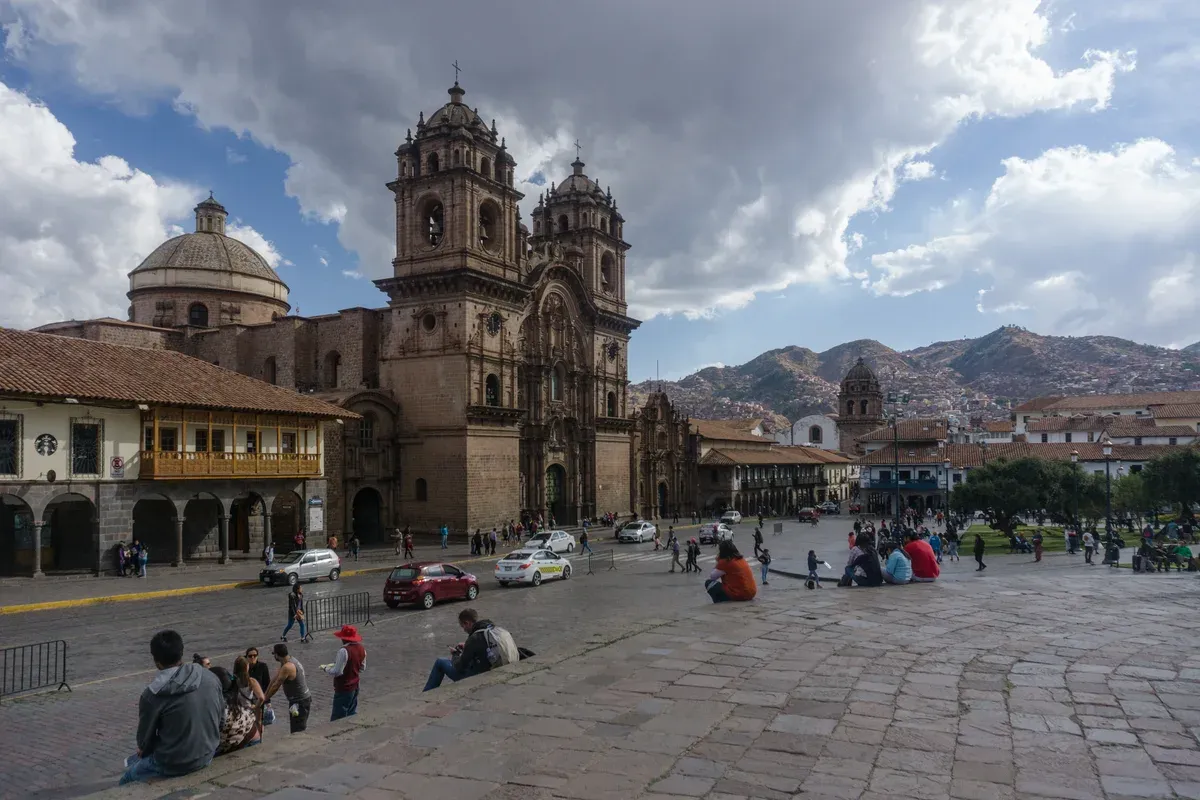
The Plaza de Armas in Cusco, where most trek pickups begin. Photo: Alexey Komarov, CC BY-SA 4.0, via Wikimedia Commons
Ways to Make It Easier
You do not have to suffer. Between route choice, horse support, luggage portering and where you sleep, there are several honest levers.
Four Days, Five Days or Two
The classic route is 5 days, roughly 70 to 75 km from Soraypampa or about 92 km if you start in Mollepata. Roads and trains allow shortening it to 4 days or a hard 3, which removes distance but not the pass. The 4-day version still climbs to the pass on day 2, so it is not easier at the critical moment, it just packs the same high point into fewer days. If your main concern is difficulty rather than time, the 5-day route spreads the walking thinner. A full booking comparison lives in the Salkantay trek tours table on the homepage.
There is also a 2-day option that keeps the two best bits, Humantay Lake and the pass, and skips everything else. The Humantay Lake and Salkantay Pass trek costs $335, includes a night at the Sky Camp, a sleeping bag and trekking poles, and does not go to Machu Picchu. It is the shortest way to taste the hard part without committing to four days of it.
Horses, Mules and Domes
Horse hire is priced per section: about 80 soles for the climb to Humantay and about 120 soles for the climb to the Salkantay Pass, per one operator's figures. Guided treks also carry your main luggage, with duffel limits of about 5 kg on classic services, so your daypack stays light. Independent hikers are advised to keep packs at 4 to 7 kg total.
Where you sleep changes how hard the mornings feel. The Classic 5-Day Salkantay Trek at $760 uses dome camps with a Machu Picchu ticket and a panoramic train back, capped at 10 trekkers. The Glamping Sky Lodge Domes 4-day trek at $680 sleeps you two nights in domes with private bathrooms and hot showers, though the Machu Picchu ticket and the return to Cusco are paid on top.
Train Your Legs Before You Train Your Lungs
Salkantay Trekking advises training for several weeks before departure, with weekly hikes that include long uphill and downhill sections. That advice is aimed squarely at the pass descent, which punishes knees more than the climb punishes lungs. The trek is judged doable by anyone with reasonable fitness, but you should be acclimatised and mentally prepared for tough days.
One trekker rated day 2 the physically hardest and day 4 the mentally hardest, with 22 km of which nine ran along train tracks. Sturdy boots and trekking poles earn their weight on this route.
Salkantay Trek Difficulty: Questions
How hard is the Salkantay trek for a beginner?
Challenging but achievable. Operators quote about 6 to 8 hours a day on rugged dirt trail, and day 2 climbs about 810 m to the pass at about 4,630 m. Reasonable fitness and 2 to 3 days acclimatising in Cusco at 3,400 m matter more than being an experienced trekker. See the day-by-day table in how hard each day is.
Is the Salkantay trek dangerous?
The listed hazards are altitude, sun, cold, and landslides in the rainy season, plus snakes and tarantulas in the lower sections. Landslides have closed trail sections before. One operator says its guides carry oxygen and first aid, and horses are available on the pass. The full risk picture is in is the Salkantay trek dangerous.
How bad is altitude sickness on the Salkantay trek?
You sleep at about 3,900 m on the first night and cross about 4,630 m on day 2, well above the 2,500 m line where the NHS says altitude sickness usually occurs. Symptoms normally start 6 to 10 hours after arrival at altitude, and worsening symptoms call for descending 300 to 1,000 m. Read the rules in altitude: the real difficulty.
Which is harder, the Salkantay trek or the Inca Trail?
Several trekkers and operators who compare the two rate Salkantay harder, because it reaches about 4,630 m against the Inca Trail's 4,215 m and its longest days run 20 to 22 km against one 16 km day. The Inca Trail is regulated, permitted and supported throughout. The full breakdown is on Salkantay trek vs Inca Trail.
Can you make the Salkantay trek easier or shorter?
Yes. Horses cost about 80 to 120 soles per climb, guided treks porter your duffel, and the route can be shortened to 4 days. The shortest option is the 2-day Humantay Lake and Salkantay Pass trek, which skips Machu Picchu. The options are set out in ways to make it easier.